




About the manufacturer
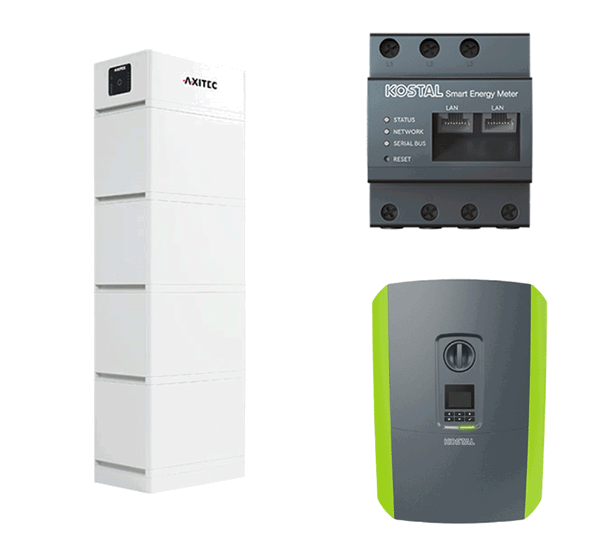
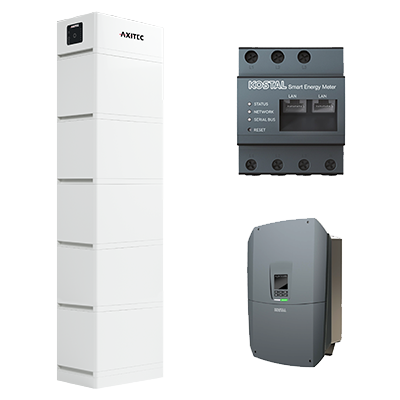
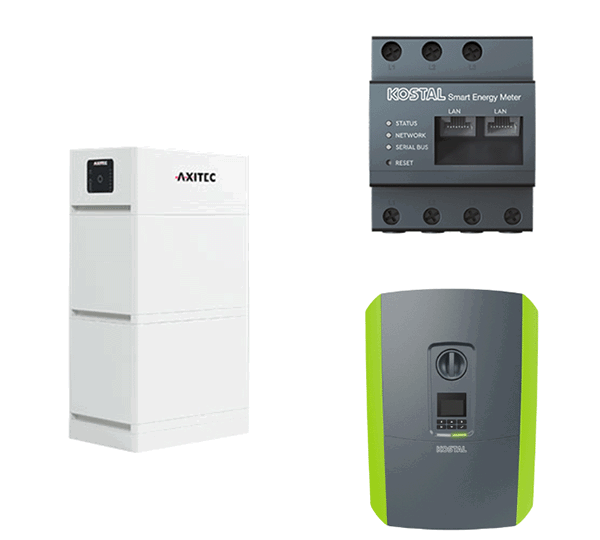
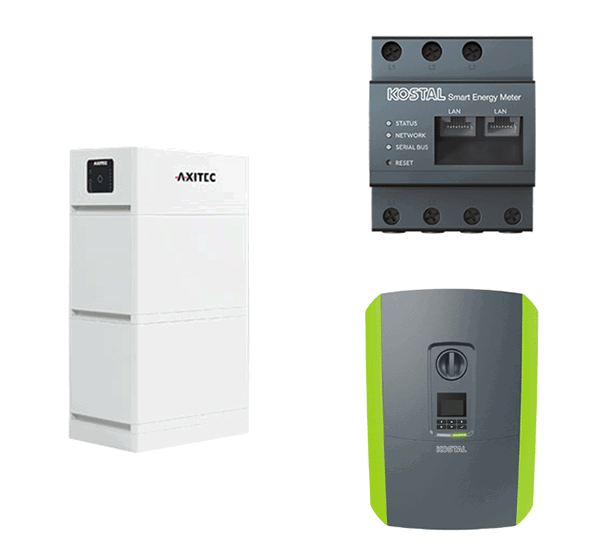
KOSTAL stands for technically sophisticated, future-proof solutions in photovoltaics. From hybrid inverters and commercial inverters to smart wallboxes, the company offers high-quality system components for domestic and commercial applications, all made in Germany. Installers benefit from intuitive technology, broad compatibility, clever features such as EEBUS integration, and sustainable manufacturing. Here in the shop, you’ll find the KOSTAL range, including matching accessories, downloads and professional support.
Contact
to manufacturers support page
to manufacturers page
Inverters for residential solar installations
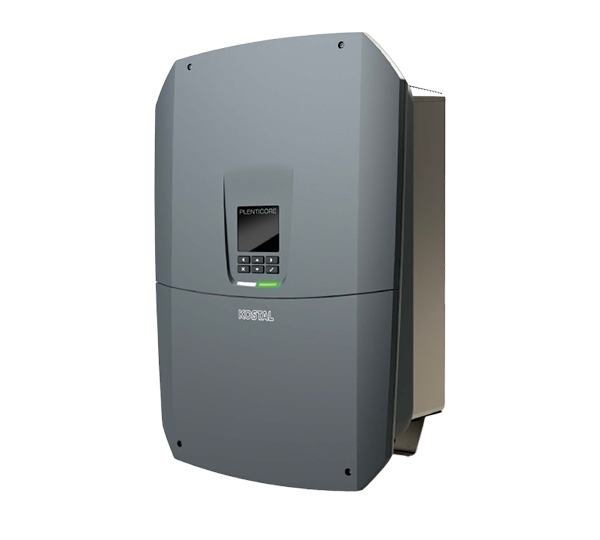
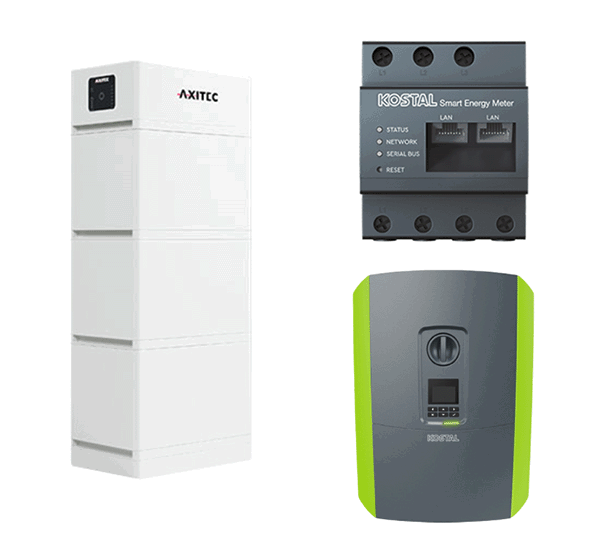
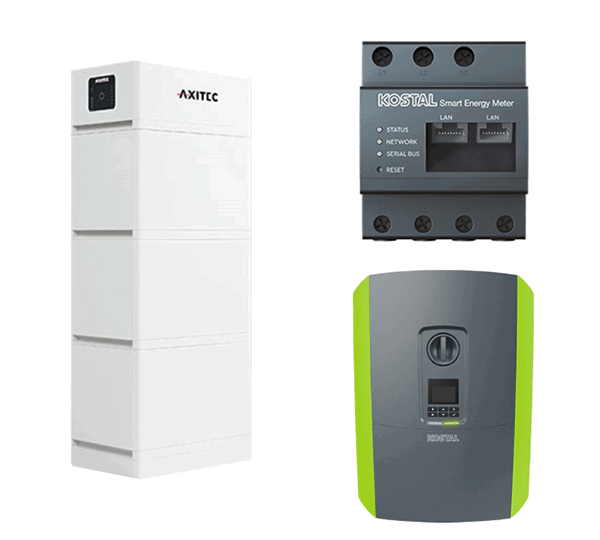
PLENTICORE G3 – Latest-generation universal inverter
The PLENTICORE G3 is KOSTAL’s premium model.
- Hybrid-ready ex-works, with an integrated battery charging port and flexible expansion options
- 2 plus 1 MPP trackers, offering high flexibility in system design
- Optional battery connection
- Integrated EEBUS communication for smart consumption management
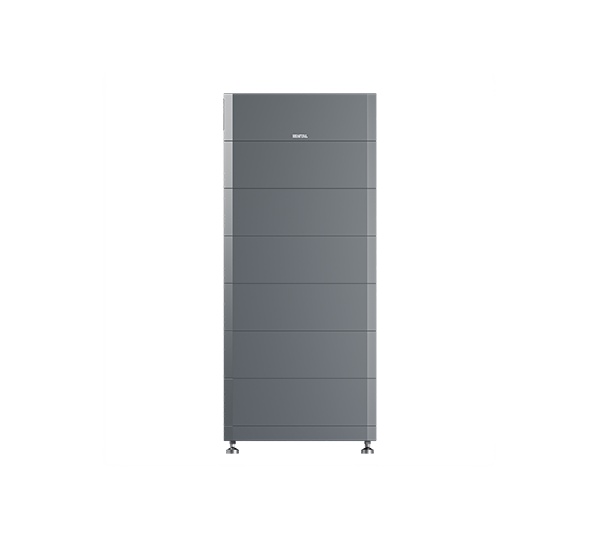
- Compatible with selected high-voltage storage systems, such as the BYD Battery-Box Premium
- DC Type 2 surge protection, can be retrofitted as an option, IP65
- MDC-compatible from the relevant software version onwards
The PLENTICORE G3 is ideal for domestic installations, storage solutions and sector coupling. It is manufactured in Germany and offers a high level of safety, flexible expandability and easy commissioning.
PLENTICORE MP G3 – Single-phase and flexible
The PLENTICORE MP G3 adds a single-phase solution to the KOSTAL product range.
- For smaller PV systems, repowering and storage applications
- 1 plus 1 or 2 plus 1 MPP trackers, depending on the model
- Optional battery connection and flexible power expansion
- MDC-compatible from the relevant software version onwards
This makes the PLENTICORE MP G3 the ideal solution for projects where a compact design, straightforward planning and high system flexibility are required.
Multi-Device Control – Enhanced Performance in a Network of Devices
With Multi Device Control, or MDC for short, KOSTAL is enhancing the PLENTICORE G3 and PLENTICORE MP G3 inverters with a central control system for installations featuring multiple battery storage units. One inverter acts as the host, controlling up to two further compatible units. This creates a high-performance integrated system comprising up to three hybrid inverters with a combined charging and discharging capacity of up to 60 kW.
Translated with DeepL.com (free version)
The main benefits for installers:
- Centralised configuration and visualisation in the host inverter
- LAN networking of the devices
- Flexible combination of compatible battery storage systems from different manufacturers and with different capacities
- Suitable for projects involving high levels of self-consumption, dynamic grid connection control and controllable loads
- Existing devices can be integrated into the MDC network via a software update
For operation within the MDC network, a Kostal Energy Meter (KEM) or a Kostal Smart Energy Meter (KSEM) is required at the grid connection point. Both devices monitor the system’s energy flows and provide the host inverter with key data on consumption, feed-in and grid consumption. In the MDC network, the host inverter is responsible for central control. The KEM or KSEM acts as a measuring device and data source for coordinated system control.
For systems with two or more inverters, each with a battery connected, the ‘Battery Control with MDC’ product extension is activated using an activation code. For installers, MDC means greater battery capacity, a clear division of roles within the system and centralised control for complex energy storage projects.
FAQ
Multi Device Control (MDC) is used to control multiple battery storage units within a single system. A central device coordinates all integrated components and ensures that all storage units operate in a coordinated manner.
System architecture and distribution of tasks
An MDC network consists of one MDC host (PLENTICORE G3 inverter) and up to two MDC clients.
The MDC host acts as the central control unit and monitors and regulates all MDC-compatible devices within the home network. To operate more than one battery storage unit, the paid product extension ‘Battery Control with MDC’ is required on the host. Without this activation, only the battery connected directly to the host can be used.
The battery with the largest usable storage capacity must always be connected to the MDC host. The battery with the largest usable storage capacity must always be connected to the MDC host.
Charging behaviour and SoC synchronisation
The system ensures that the states of charge (SoC) of all connected batteries are synchronised as evenly as possible. In the event of differing storage capacities or individually specified minimum states of charge, the host automatically adjusts the charging and discharging power to suit the respective conditions. The aim of this control mechanism is to achieve as uniform a distribution of the state of charge as possible across all battery storage units. Due to the nature of the system, there is an SoC offset of approximately 5% between the host and the clients. As a result, the battery connected to the host always reaches both the maximum charge (100% SoC) and the set minimum SoC last. For battery charging, the host automatically utilises the energy from all PV inverters available on the domestic grid and coordinates its distribution across the entire storage system.
Communication and data logging
Clear requirements for device communication have been defined to ensure reliable operation. Data communication between the MDC host and MDC clients takes place exclusively via a LAN connection. The MDC function does not support a connection via Wi-Fi. The energy meter (KEM or KSEM) is installed at the grid connection point and connected directly to the MDC host via the RS485 interface. The host processes the measured values and forwards the necessary control information to the clients, for example for power control.Special considerations during operation
During day-to-day operation, there are a number of system-specific characteristics to bear in mind:
In the event of a mains power failure whilst in backup mode, only the battery on the MDC host is used to supply power. In this case, the MDC clients, including their connected battery storage units, are deactivated. Central settings for battery usage are configured directly on the MDC host’s web server and then apply to the entire MDC network. Only individual parameters, such as the minimum state of charge, are set on the client devices.
The fundamental difference between an MDC host and an MDC client lies in their function within the system: the MDC host is responsible for central control and coordination, whilst the MDC clients, as connected devices, follow the host’s instructions. Control and system monitoring: MDC host.
The host is the central control unit for the entire MDC network. It monitors and controls all connected MDC-enabled devices on the home network. Clients are detected, connected and managed via the integrated device manager. The complete power flow diagram for the system is available exclusively on the host.
MDC client
Clients are controlled entirely by the host. The web server or a client’s display merely shows the operating data for the respective device. Information on the entire system or the complete energy flow is not available there.
Connection of energy meters and control devices
MDC Host
The energy meter (KEM or KSEM) is connected directly to the host via an RS485 interface. External control components, such as district heating control receivers or control boxes in accordance with Section 14a of the German Energy Act (EnWG), are connected exclusively to the host. The host processes the measurement and control signals and distributes the relevant information within the network.
MDC client
Clients have no direct connection to the energy meter or to external control devices. They receive all necessary measurement values and control parameters from the host via LAN communication.
Battery management and backup power operation
MDC Host
The host is responsible for the central control of the charging and discharging strategy for all connected battery storage units. In systems with multiple batteries, the battery with the largest usable capacity must be connected to the host. In backup or emergency power mode, only the battery connected to the host is used.MDC client
Only local battery parameters, such as the minimum state of charge (Min. SoC), can be set on a client. System-wide battery settings are configured centrally on the host. In emergency power mode, the client inverters, including their connected batteries, are deactivated.System Configuration and Communication
MDC Host
System-wide settings, such as feed-in limits or power control, are configured via the host. It can also serve as a communication interface to the internet for the clients.MDC client
The Modbus protocol is enabled by default to allow the host to access device data. The connection to the host must be made via a wired LAN; communication via Wi-Fi is not supported.
EEBus Communication
MDC Host
The host establishes the connection to the respective EEBus counterpart device and coordinates communication within the system.MDC client
The clients are integrated into the EEBus communication of the overall system and provide the necessary connections to the EEBus counterpart device in accordance with the system configuration.
Multi Device Control (MDC) significantly expands the possibilities for system control compared to the traditional control system via the KOSTAL Smart Energy Meter (KSEM). MDC offers numerous advantages, particularly in relation to battery storage systems, smart energy management and current regulatory requirements.
Support for multiple battery storage systems
A key advantage of MDC is the ability to centrally manage multiple battery storage systems within a single system.
- With standard KSEM control, only one battery-powered device can be managed.
- With MDC, however, up to three inverters with connected battery storage systems can be operated as a single network.
- This requires the ‘Battery Control with MDC’ product extension to be activated on the MDC host.
Support for dynamic electricity tariffs
MDC was developed to meet the requirements of modern energy markets and supports functions for utilising dynamic electricity tariffs.
- This enables the storage system to respond flexibly to variable electricity prices.
- The KSEM-based control system does not offer this capability to the same extent.
Compliance with regulatory requirements
MDC supports compliance with legal and grid-related requirements, for example in accordance with Section 9 of the EEG and Section 14a of the EnWG.
- The MDC host receives signals from control units such as an FNN control box or a remote control receiver.
- The relevant settings are then automatically forwarded to all connected MDC clients.
- This ensures that the power limitation for the entire system is coordinated and implemented in accordance with standards.
Centralised system visualisation
MDC provides a centralised overview of the entire energy system.
- The complete power flow diagram is displayed directly on the web server and on the MDC host’s screen.
- Energy flows, storage statuses and power values for all connected devices can be viewed in one place.
- With a KSEM-based solution, inverters previously had to be managed and monitored individually.
Simplified commissioning and configuration
Setting up an MDC network is now significantly more straightforward.
- New inverters are automatically detected and integrated via the MDC host’s device manager.
- Manual configuration of individual devices in KSEM is largely no longer necessary.
- This reduces both the set-up effort and the likelihood of errors during commissioning.
Intelligent energy and battery management
MDC enables a significantly more intelligent use of available energy sources.
- Surplus AC energy from all PV inverters in the domestic grid can be automatically used to charge the battery.
- The MDC host coordinates the charging and discharging processes for all connected storage units.
- In addition, the states of charge (SoC) of the individual batteries are automatically balanced to ensure that the storage system is utilised as evenly as possible.
PLENTICORE plus G2 -
The tried-and-tested all-rounder
- Also suitable for hybrid systems
- 2 MPP trackers plus an activatable battery connection or a third DC connection
- With integrated energy management
- The G2 is the robust solution for small to medium-sized PV systems
PIKO MP plus – Compact single-phase hybrid inverter
- For small installations, such as a detached house with an east-west facing roof
- Single-phase, with battery connection
- Can be combined with the KOSTAL Smart Energy Meter as an option
- Can also be used as an AC-coupled storage system
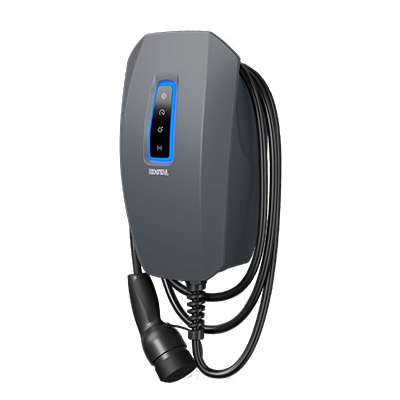
ENECTOR – The smart wallbox from KOSTAL
- AC charging power of up to 11 kW
- Surplus PV charging possible via the Kostal Smart Energy Meter
- Ready to connect, simple installation
- Optionally available with an activation code for additional convenience features
- IP54 protection rating, suitable for indoor and outdoor use
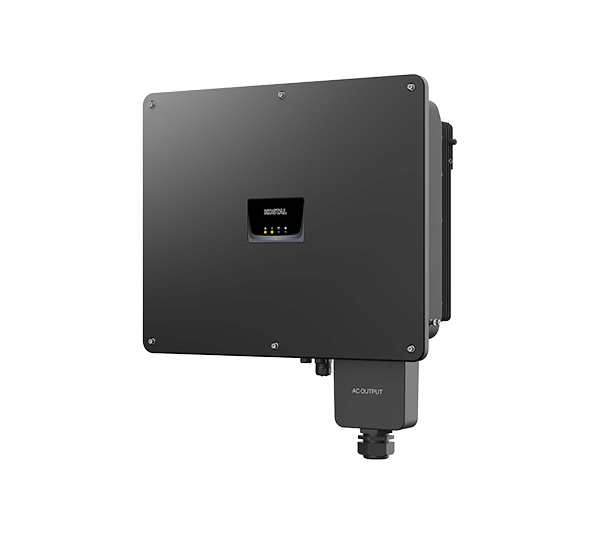
PIKO CI – The solution for commercial PV systems
- 3-phase, available in several power classes
- Integrated DC isolator, Type 2 surge protection and data logger
- Depending on the variant, multiple MPP trackers for flexible design options
- High input currents for the latest generation of modules
- Easy connection to monitoring, system control and direct sales
The PIKO CI is optimised for commercial rooftop PV systems and smaller ground-mounted installations.
PIKO CI 100 – For large solar parks and industrial installations
- 100 kW AC output power
- 8 MPP trackers with 16 DC inputs
- Maximum system voltage 1,100 V, 20 A per DC input
- Integrated interfaces for monitoring and external control systems
- Type 2 overvoltage protection for AC and DC, protection class IP66
The large CI variant combines efficiency, flexible DC configuration and high protection requirements for large-scale PV installations.
About KOSTAL
The KOSTAL Group was founded in 1912 and operates across four business divisions. These include KOSTAL Solar Electric, which has specialised in photovoltaic solutions since 2006.
- Head office in Freiburg, Breisgau
- Development and manufacturing in Germany
- Own sites in over 20 countries
- Focused on sustainability, resource conservation and quality
KOSTAL develops intelligent components for future-proof energy management – designed from real-world experience for real-world application.