

BYD - Leading Battery Manufacturer
BYD is one of the largest producers of batteries and accumulators globally. The Chinese manufacturer's products are used in devices like mobile phones and other consumer electronics. Their portfolio also includes highly popular battery storage systems for PV installations.
The Battery-Box Premium HVS/HVM and LVS
BYD offers both high-voltage and low-voltage batteries. The first two letters in the product name indicate the voltage range of the battery:
- HV = High Voltage: A high-voltage battery with a voltage range of approximately 150 to 500 volts per stack
- LV = Low Voltage: A low-voltage battery with a voltage of 51.2 volts
Both storage systems are suitable for residential and commercial applications and start at low storage capacities. The smallest HVS/HVM battery has a capacity of 5.12 kWh, while the smallest LVS begins at 4 kWh. Both systems are modular and can be expanded. HVS/HVM can reach up to 66.2 kWh by combining up to three HVM stacks, while LVS can scale up to 256 kWh with 16 stacks. The difference between HVS and HVM lies in the capacity of the storage modules.
Both systems require a Battery Control Unit for each stack, consisting of several interconnectable battery modules. For parallel connection of multiple stacks in the HVS/HVM series, a Combiner Box is necessary.
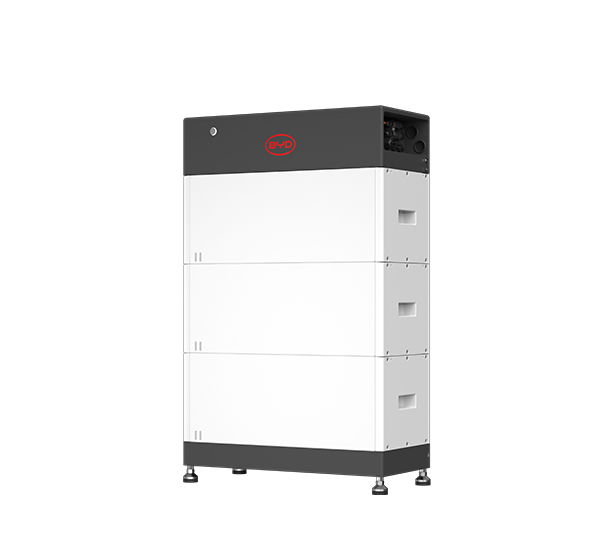
The Battery-Box Premium LVL
The LVL storage system consists of two modules and has a capacity of 15.4 kWh. Up to 64 storage units can be connected in parallel, reaching a maximum capacity of 983 kWh. This system is therefore suitable for significantly larger projects compared to BYD’s smaller battery systems. As indicated by its name, the LVL is a low-voltage battery with a voltage of 51.2 volts, just like the LVS.
Can BYD storage systems be expanded?
BYD's storage systems are modular and can be expanded. Thanks to the plug-and-play design, the process is relatively straightforward. However, the configuration of the storage system and inverter must be adjusted, which can typically be done using the devices’ control apps.Are BYD storage systems AC or DC systems?
All batteries store energy as direct current (DC). Similarly, PV systems generate DC power, whereas household electricity is alternating current (AC). Depending on the system, either AC or DC storage is required. BYD storage systems can be integrated into both AC and DC environments as needed. Inverters are required for this process.Which inverters are compatible with BYD storage systems?
BYD storage systems are compatible with many renowned inverter manufacturers, including:
- GoodWe
- Fronius
- Kaco
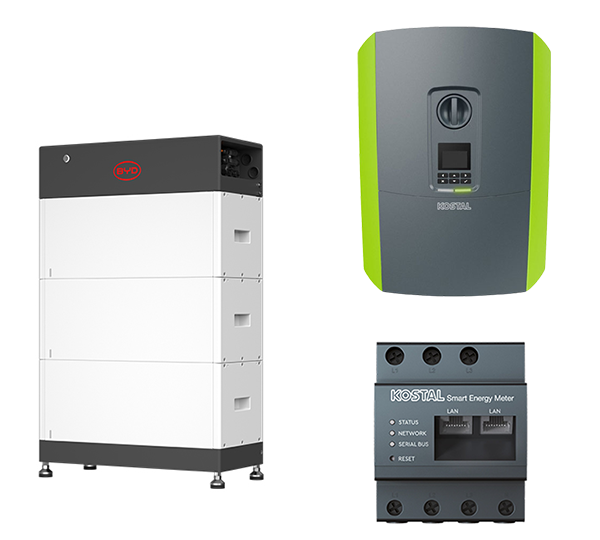
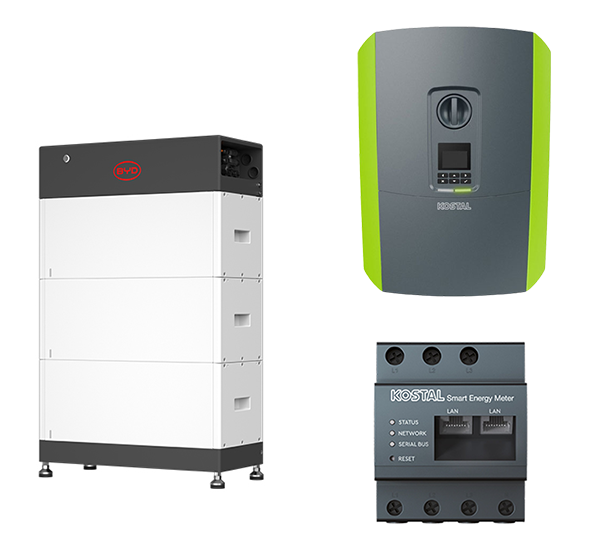
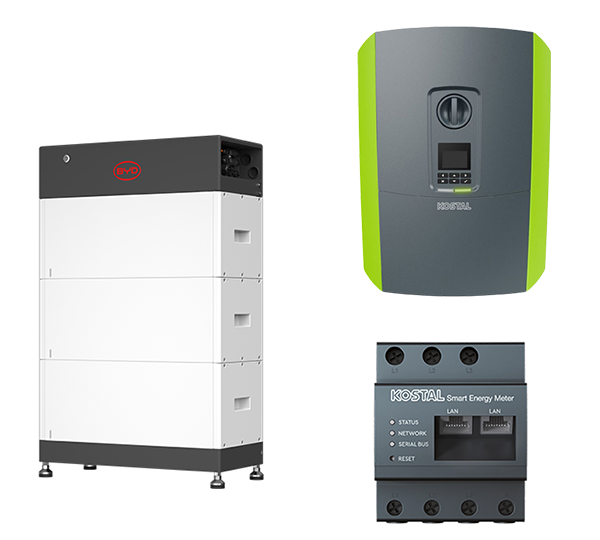
- Kostal
- SMA
- SolarEdge
- Sungrow
Depending on the inverter series, either low-voltage or high-voltage batteries are used. A detailed overview of compatible devices and configurations can be found in ourstorage system overview.
Which app is needed for BYD storage?
BYD storage systems can be managed using the Be Connect App. For installers, there is also the Be Connect-Plus PC Tool.
Key Facts about BYD
BYD was founded in 1995 in Shenzhen. BYD stands for "Build Your Dreams," though the name originates from the company’s initial name, Yadi Electronics. In addition to PV batteries, BYD produces components and batteries for mobile phones, other consumer electronics, and LEDs. The company also owns BYD Auto Company, one of the largest car manufacturers worldwide. BYD employs over 900,000 people, though the number working specifically in the battery division is unknown.
224 Articles
Grid
List
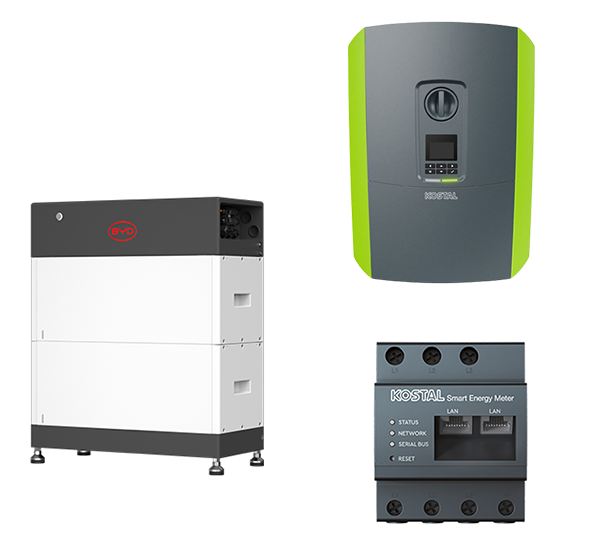
Set
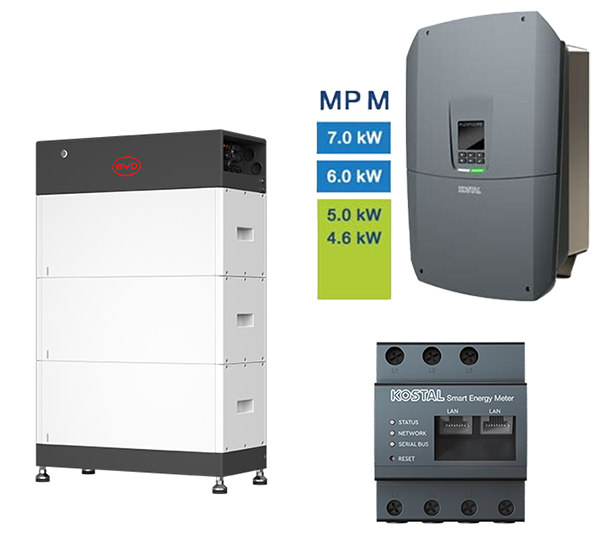
Kostal + BYD
0162205
Set
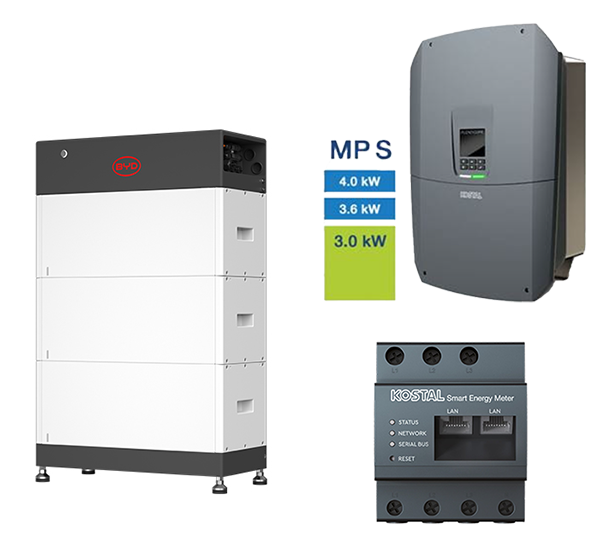
Kostal + BYD
0162204
Set
Kostal + BYD
0162241
Set
Kostal + BYD
0162244
Set
Kostal + BYD
0162246